
Understanding the Odds in Casino Lotteries
Casino lotteries, while often perceived as games of pure chance, do have underlying mathematical probabilities that govern their outcomes. Smart players understand that « grasping » these probabilities doesn’t mean predicting the exact numbers, but rather understanding the likelihood of various scenarios. This involves recognizing that each draw is an independent event, meaning past results have no bearing on future outcomes. For instance, in a typical lottery draw, the chance of a specific number being selected remains constant for every draw, and understanding this is key to responsible play, much like understanding the services offered by plexian casino uk.
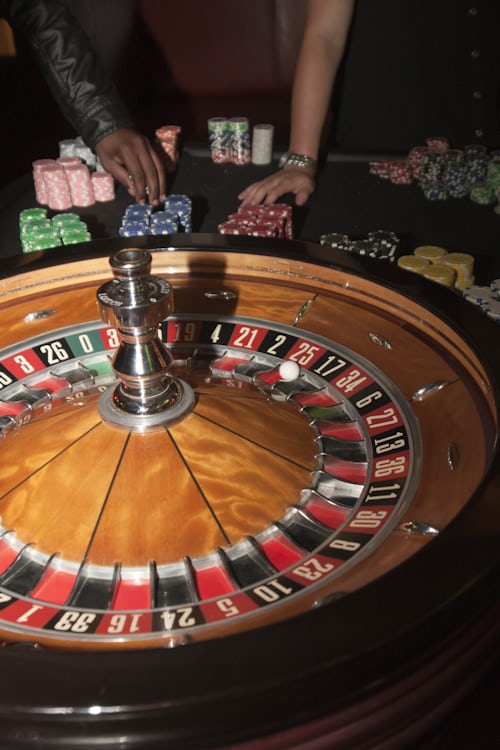
The fundamental concept here is that the number of possible combinations increases exponentially with each additional number or ball involved in the draw. A lottery with more numbers and a larger pool from which to draw will inherently have lower odds of winning the jackpot compared to a lottery with fewer numbers. This understanding helps players set realistic expectations and avoid the misconception that certain numbers are « due » to be drawn.
Key Probability Concepts for Casino Games
At the heart of casino lotteries lies the principle of combinations. The formula for calculating combinations (nCr = n! / (r! * (n-r)!)) is crucial for determining the exact odds of hitting a winning ticket. Here, ‘n’ represents the total number of possible outcomes (e.g., balls in the lottery machine), and ‘r’ represents the number of selections made. Understanding this formula allows players to quantify the difficulty of winning and to compare different lottery games based on their statistical advantages.
Furthermore, players should be aware of the concept of « expected value. » While often negative in casino games, understanding it helps in evaluating the long-term profitability of playing. For lotteries, the expected value is typically the sum of (probability of winning each prize * prize amount) minus the cost of the ticket. A negative expected value signifies that, on average, players will lose money over time. Smart players use this to inform their decisions about how much they are willing to spend.
Strategies for Improving Chances (within Probability Limits)
While it’s impossible to truly « beat » the odds in a fair lottery, smart players employ strategies to maximize their potential returns and minimize losses. One common approach is to play lotteries with better odds, often those with smaller prize pools or fewer numbers to choose from. These games, while offering smaller jackpots, present a statistically higher chance of winning something.
Another strategy involves syndicate play. By pooling resources with other players, a group can purchase more tickets, thereby increasing their collective chance of winning. However, it’s vital to have clear agreements on how any winnings will be split. It’s also important to remember that while the probability of the syndicate winning increases, the individual share of any prize will be smaller.
The Role of Randomness and Independent Events
The inherent nature of casino lotteries is their reliance on randomness. Each ball or number has an equal chance of being selected, and the outcome of one draw has absolutely no influence on the next. This means that « hot » or « cold » numbers are merely statistical artifacts of past draws and hold no predictive power. Players who meticulously track past results are often falling prey to the gambler’s fallacy.
Sophisticated players accept this randomness and focus on the probabilities of the game itself, rather than trying to find patterns where none exist. They understand that the thrill comes from the possibility, not from a perceived system of prediction. This acceptance allows for a more responsible and enjoyable approach to participating in these games of chance.
Plexus GB and Understanding Casino Lottery Engagement
Organizations like Plexus GB, while not directly operating casino lotteries, often engage with communities on initiatives that might involve fundraising or awareness campaigns where elements of chance and probability are present in the broader sense. Understanding the public’s perception and engagement with games of chance, including casino lotteries, can be valuable for such organizations when designing community events or fundraising activities that might incorporate prize draws or raffles. The principles of probability, fairness, and transparency are universally applicable when dealing with any activity involving uncertain outcomes.
For individuals interested in learning more about community initiatives or responsible engagement with various forms of public participation, exploring the resources and information provided by organizations like Plexus GB can offer valuable insights. Their focus on community well-being and engagement likely provides a framework for understanding how different aspects of public life, including those touching upon games of chance in a responsible context, are managed and how individuals can participate meaningfully and informedly.